

Upgrading your garage in Surrey with an electric vehicle charger can feel like a big project, especially with so many technical details to consider. Homeowners want a safe, reliable setup that meets all legal requirements and opens the door to valuable government grants. This guide lays out the step-by-step EV charger installation process and explains how to qualify for official financial support, helping you power up with confidence.
Table of Contents
- Step 1: Assess Installation Requirements And Site Suitability
- Step 2: Select An OZEV-Approved Residential EV Charger
- Step 3: Arrange A Certified Electrician Site Survey
- Step 4: Comply With DNO Notification And UK Standards
- Step 5: Verify Installation And Perform Initial Charger Test
Quick Summary
| Key Point | Explanation |
|---|---|
| 1. Assess your electrical system | Evaluate the capacity and compatibility of your property’s electrical infrastructure before installing an EV charger. |
| 2. Choose an OZEV-approved charger | Selecting an approved charger ensures safety, compatibility, and may qualify you for government grant funding. |
| 3. Hire a qualified electrician | A certified electrician will conduct a thorough site survey and ensure your installation meets all legal and safety standards. |
| 4. Register with your DNO | Notify your local Distribution Network Operator before installation to ensure compliance and network stability. |
| 5. Conduct thorough testing post-installation | After installation, a comprehensive test of the EV charger is essential to confirm safety and operational effectiveness. |
Step 1: Assess installation requirements and site suitability
Before installing an electric vehicle charger in your home, you need to conduct a comprehensive site assessment that ensures electrical compatibility, safety, and optimal functionality. This critical first step determines whether your property can support an EV charging point and identifies any potential modifications required.
Start by examining your property’s electrical infrastructure. You’ll want to verify your consumer unit’s capacity and confirm you have sufficient electrical headroom to accommodate an EV charger. According to government technical specifications, residential chargepoints must comply with BS 7671:2018 + A1:2020 wiring regulations. This means checking your existing electrical system can handle additional load without overloading circuits. Key considerations include evaluating your home’s power supply, measuring the distance between your proposed charging location and the nearest electrical connection, and assessing parking proximity to your power source.
Your site survey should also consider practical installation factors such as parking space configuration, weather protection, cable routing, and accessibility. Measure the distance from your proposed charging point to your vehicle’s typical parking spot, ensuring the charging cable can comfortably reach. Examine potential mounting surfaces for stability and consider factors like wall material, proximity to your consumer unit, and protection from environmental elements. Comprehensive site requirements recommend having a fixed, dedicated parking space that allows convenient and safe charging.
Here is a summary of key factors to consider during your site assessment:
| Consideration | Importance | Typical Requirement |
|---|---|---|
| Electrical Compatibility | Prevents overloading and ensures safety | Modern consumer unit, sufficient load |
| Parking Space | Enables safe, practical charger placement | Dedicated spot near power supply |
| Weather Protection | Promotes device longevity and reliability | Covered or weatherproof area |
| Cable Routing | Ensures neat and safe installation | Direct path, minimal tripping hazard |
| Accessibility | Simplifies everyday charging | Easy access from vehicle to charger |
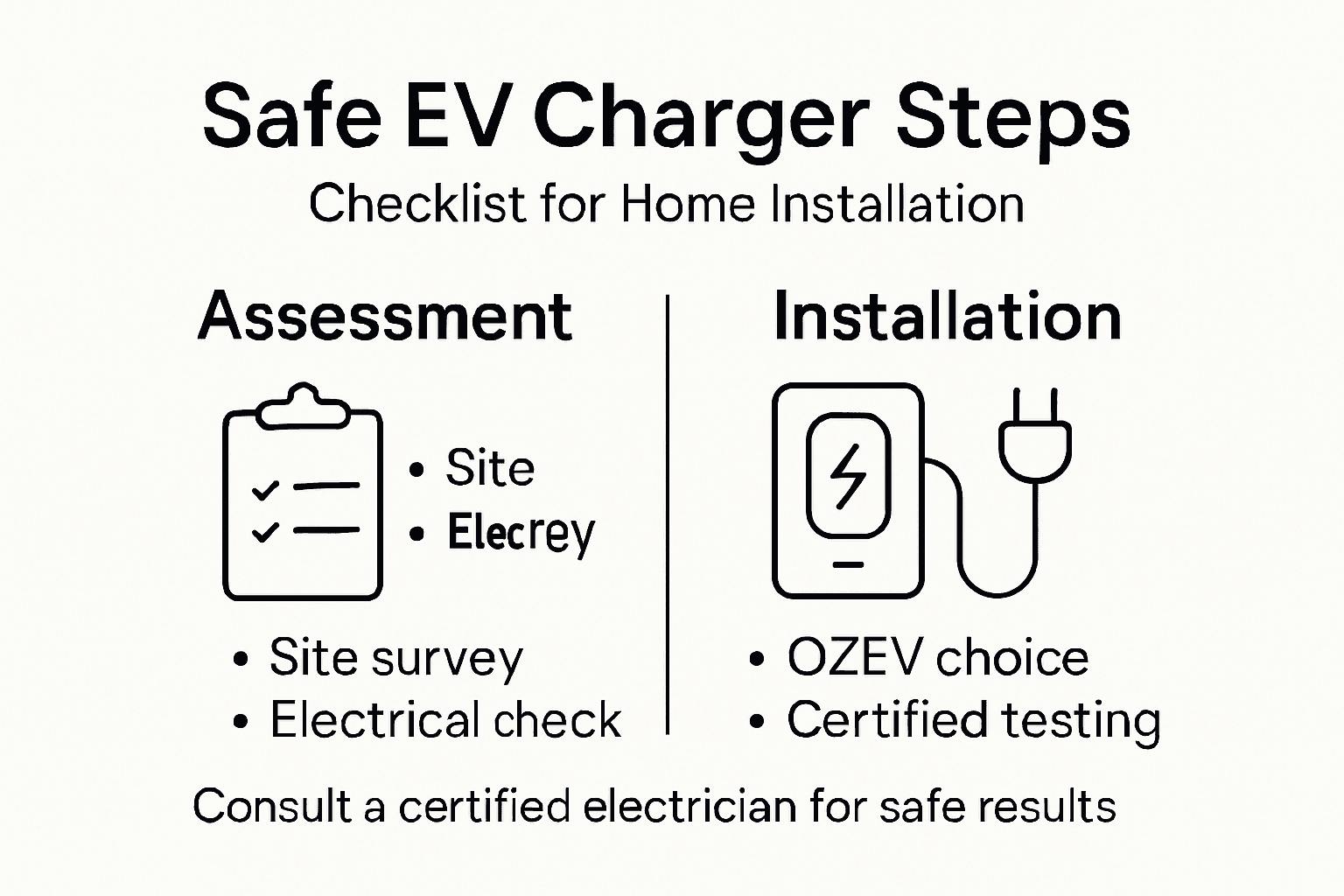
Expert Recommendation: Always engage a certified electrician to conduct a professional site survey and provide a detailed assessment of your specific installation requirements.
Step 2: Select an OZEV-approved residential EV charger
Choosing the right electric vehicle charger is a critical step in ensuring safe, efficient, and grant-eligible home charging. Your selection will directly impact your charging speed, electrical compatibility, and potential government incentives.
When selecting an EV charger, prioritise models that meet OZEV government standards. These approved chargers guarantee compliance with technical specifications and safety regulations, making you eligible for potential grant funding. Look for chargers that offer appropriate power ratings typically ranging from 3.5kW to 7.4kW for home installations. Consider factors like your electric vehicle’s compatibility, charging speed requirements, and your home’s electrical infrastructure. Some key considerations include cable length, smart charging capabilities, weatherproofing, and integration with smartphone apps.

Research different charger models from reputable manufacturers, comparing their features, warranty periods, and user reviews. Pay attention to installation requirements, such as wall mounting options and proximity to your parking space. Residential chargepoint specifications provide detailed insights into technical parameters that will help you make an informed decision. Remember that an OZEV-approved charger not only ensures safety but also maximises your potential for government financial support.
The following table compares core features of common residential EV chargers:
| Feature | Basic Model | Smart Model |
|---|---|---|
| Power Output | 3.5kW – 7.4kW | 3.5kW – 7.4kW |
| Connectivity | None or limited | Wi-Fi/Bluetooth + app integration |
| Load Management | Manual only | Automated dynamic load balancing |
| Weatherproofing | Basic enclosure | Advanced IP-rated weather protection |
| Grant Eligibility | Varies | OZEV-approved, financial incentives |
Expert Recommendation: Consult a certified electrician who can assess your specific home electrical setup and recommend the most suitable OZEV-approved EV charger for your needs.
Step 3: Arrange a certified electrician site survey
A comprehensive site survey is your crucial first step in ensuring a safe and effective electric vehicle charger installation. This professional assessment will determine the feasibility and specific requirements for your home charging setup.
To begin, research and select a qualified electrician with specific experience in EV charger installations. Look for professionals who are NICEIC certified and have demonstrable expertise in residential electrical work. During the site survey, the electrician will thoroughly evaluate your property’s electrical infrastructure, assessing your consumer unit’s capacity, measuring cable routing distances, and identifying any potential modifications needed to support your EV charging point. They will examine your existing electrical system, evaluate power supply capabilities, and provide a detailed recommendation tailored to your specific home configuration.
During the site survey, expect the electrician to discuss critical aspects such as charger placement, cable management, potential wall mounting locations, and proximity to your vehicle’s parking space. They will also advise you on any necessary electrical upgrades, confirm compatibility with your chosen EV charger, and provide a comprehensive quote for the installation. This professional assessment helps prevent potential installation complications and ensures your charging setup meets all safety and regulatory standards.
Expert Recommendation: Prepare a list of questions and gather relevant information about your electrical system and vehicle before the site survey to maximise the electrician’s assessment.
Step 4: Comply with DNO notification and UK standards
Navigating the legal and technical requirements for electric vehicle charger installation involves understanding your obligations to the Distribution Network Operator (DNO) and adhering to UK electrical standards. This crucial step ensures your home charging setup is safe, compliant, and legally recognised.
Your first priority is to register energy devices correctly with your local DNO before installation. This notification process is mandatory for all new electrical installations that might impact the local electricity network. Your certified electrician will typically manage this process, submitting detailed documentation about your proposed EV charger, including its electrical specifications, anticipated power draw, and installation location. They will ensure compliance with BS 7671 wiring regulations and confirm that your home’s electrical infrastructure can support the additional load without compromising network stability.
The DNO notification process involves a thorough review of your installation plans, assessing potential impacts on local electrical infrastructure. Your electrician will help you prepare documentation demonstrating that your EV charger meets all relevant safety standards, including earthing requirements, circuit protection, and load management capabilities. This step is not just a bureaucratic formality but a critical safety measure that protects both your home’s electrical system and the broader community network.
Expert Recommendation: Request a copy of the DNO approval documentation for your records and keep it safely stored with your other home electrical installation certificates.
Step 5: Verify installation and perform initial charger test
The final stage of your electric vehicle charger installation involves a comprehensive verification process to ensure complete safety, functionality, and compliance with UK electrical standards. This crucial step transforms your technical planning into a fully operational charging solution for your electric vehicle.
Your certified electrician will conduct systematic safety testing procedures that go beyond simple visual inspections. These comprehensive checks include protective earth connection tests, resistance measurements, voltage verifications, and fault circuit assessments. The electrician will meticulously examine every aspect of the installation, ensuring that your EV charger meets the stringent requirements outlined in BS 7671 wiring regulations and BS-EN 61851-1:2019 standards. They will use specialised testing equipment to validate electrical integrity, confirm proper earthing, and verify that all protective mechanisms function correctly.
During the initial test, the electrician will connect your electric vehicle to the newly installed charger, performing a complete operational check. This involves assessing charging speed, confirming communication between the vehicle and charging unit, and verifying that all smart features and safety systems are functioning as intended. They will provide you with a detailed installation certificate documenting the test results, which serves as official proof of a compliant and safe electrical installation.
Expert Recommendation: Request a complete copy of the testing documentation and store it securely with your vehicle and home insurance paperwork for future reference.
Expert EV Charger Installation Tailored for Your Home
Installing a residential EV charger comes with challenges like ensuring electrical compatibility, meeting OZEV standards, and managing DNO notifications—all critical for safe and efficient home charging. If you are worried about navigating these complexities or want to avoid costly installation mistakes the team at ADSElectrics offers certified, experienced support. Our full service covers everything from professional site surveys to final testing to guarantee compliance with UK regulations.
By choosing ADSElectrics, you gain peace of mind knowing your home EV charger installation is handled with expertise and care. We specialise in fast, reliable setups tailored to Surrey homes and provide personalised guidance on grant eligibility and smart charger options. Learn more about our services by visiting Services | The Complete Electrical Service and explore how we can simplify your transition to electric driving.
Ready to take the stress out of your EV charger installation? Visit ADSElectrics Electric Vehicle Charger Installation in Redhill Surrey today to book a certified electrician site survey and start charging your electric vehicle safely and efficiently.
Frequently Asked Questions
What do I need to assess before installing a residential EV charger?
To ensure safe home installation, evaluate your property’s electrical infrastructure, including the capacity of your consumer unit and available electrical load. Conduct a thorough site survey to confirm compatibility and identify any modifications needed for optimal functionality.
How do I select the right OZEV-approved EV charger for my home?
Choosing an OZEV-approved EV charger involves prioritising models that meet government standards for safety and efficiency. Research chargers that match your vehicle’s requirements, typically ranging from 3.5kW to 7.4kW, and consider features like smart capabilities and weatherproofing to suit your installation needs.
What steps should I take to arrange a certified electrician for a site survey?
Start by researching qualified electricians with experience in EV charger installations, ensuring they are NICEIC certified. Schedule a comprehensive site survey, during which they will evaluate your electrical infrastructure and provide recommendations tailored to your home’s specific requirements.
What is the importance of notifying my Distribution Network Operator (DNO) before installation?
Notifying your DNO before the installation is essential as it ensures compliance with local electrical network regulations. The notification process helps prevent potential overloads and identifies any necessary adjustments to maintain network stability, safeguarding your home and community supply.
How can I verify that my EV charger installation meets safety standards?
After installation, ask your certified electrician to conduct thorough safety testing procedures, including checking earthing and ensuring proper functionality. Request a detailed installation certificate documenting these tests, which confirms compliance with UK electrical standards for your peace of mind.
Recommended
- #1 EV Charger Installation Company In Hailsham, East Sussex – The Complete Electrical Service
- #1 EV Charger Installation Company In Eastbourne, East Sussex – The Complete Electrical Service
- #1 EV Charger Installation Company In Heathfield, East Sussex – The Complete Electrical Service
- #1 EV Charger Installation Company In Uckfield, East Sussex – The Complete Electrical Service