

For Surrey homeowners switching to an electric vehicle, choosing the right home charger can make a noticeable difference to convenience, running costs and energy use. The myenergi Zappi is one of the best-known eco-smart chargers in the UK, particularly for households with solar panels or a time-of-use electricity tariff.
But is the Zappi worth the investment for homes in Redhill, Reigate, Croydon, Epsom, Dorking and the surrounding Surrey area?
The short answer is: it can be an excellent choice, especially if you want to combine EV charging with solar generation, cheaper overnight electricity or future home energy technology. However, its benefits depend on your property, driving habits, electrical supply and tariff.
What is the Zappi Eco-Smart EV charger?
The Zappi is a smart AC home charger manufactured by myenergi. Unlike a basic EV chargepoint, it can monitor the electricity entering and leaving your property and adjust its charging rate accordingly.
It offers three main charging modes:
- FAST: charges at the maximum available rate, using grid electricity when required.
- ECO: combines available renewable energy with grid electricity to maintain charging more consistently.
- ECO+: prioritises surplus solar or other renewable generation and can pause charging when the property would otherwise import electricity.
The Zappi is available as a 7kW single-phase charger, which is normally suitable for UK homes, or a 22kW three-phase version for properties with an appropriate electrical supply and an EV capable of accepting that charging rate. Most domestic EVs and homes will use the 7kW option.
You can also choose between tethered and untethered versions. A tethered model has a permanently attached Type 2 cable, while an untethered unit allows you to use the charging cable supplied with your vehicle.
You can read the manufacturer’s current specifications on the myenergi Zappi product page.
Why is Zappi attractive for Surrey homes with solar panels?
Surrey has many properties with suitable roof space for solar PV, from suburban homes in Redhill and Reigate to larger detached properties in villages and rural areas. If you already have solar panels, the Zappi’s solar-diversion features may be its biggest advantage.
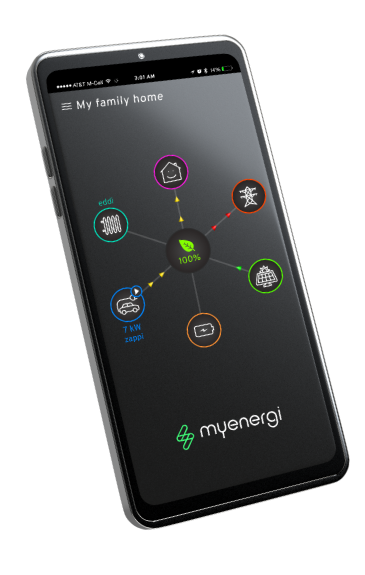
A CT clamp monitors the home’s electricity flow. When your solar panels generate more electricity than the property is using, the Zappi can divert that surplus into your EV rather than exporting it to the grid.

This can help you:
- Increase your use of self-generated electricity.
- Reduce the amount of solar energy exported.
- Put surplus daytime generation towards vehicle mileage.
- Reduce reliance on grid electricity during some charging sessions.
- Monitor energy flows through the charger and app.
In ECO+ mode, charging can pause when clouds pass over or household demand increases, then resume when sufficient surplus is available. This is useful, but it also means solar-only charging is not always predictable.
For example, a Zappi may charge well on a sunny summer afternoon but make little progress on a cloudy winter day. If you need the car ready for an early start, you can use a timed or manual boost to charge from the grid instead.
Solar batteries need careful planning
If your Surrey home also has a solar battery, the installation settings matter. Without correct configuration, the charger could unintentionally draw electricity from the battery when you intended to reserve it for evening household use.
A competent installer should consider:
- The position of the solar inverter and battery.
- The location of the incoming supply and consumer unit.
- CT clamp positioning.
- Whether the EV charger or battery should receive priority.
- Any export or import limits.
- The cable route between the consumer unit and charger.
This is one reason professional design is more important than simply buying a charger online.
Can the Zappi reduce EV charging costs without solar?
Yes. You do not need solar panels to use a Zappi.
The charger can be scheduled to operate during cheaper periods on a time-of-use or EV-specific electricity tariff. Many UK suppliers offer tariffs with lower overnight rates, although prices, conditions and compatible vehicles change regularly.
The Zappi can be useful for households considering tariffs such as:
- Octopus Intelligent Go.
- OVO Charge Anytime.
- EDF GoElectric.
- Other supplier tariffs that support scheduled or automated EV charging.
Compatibility should always be checked before changing tariff or charger. Some tariffs control the vehicle directly, while others control the chargepoint. In certain cases, the car manufacturer’s app and the Zappi app can compete with each other if both are programmed with schedules.
The practical approach is to choose one system to manage charging, then use the other only for monitoring or vehicle settings.
A smart tariff can make the Zappi worthwhile even if you do not have solar, particularly if:
- You regularly charge overnight.
- Your daily mileage is predictable.
- Your vehicle is parked at home for several hours.
- You have a smart meter.
- You are happy to allow automated charging during off-peak periods.
However, a Zappi may not deliver the best financial return if you mostly charge during expensive peak periods or rarely leave the vehicle at home long enough to use scheduled charging.
How does the Surrey electrical grid affect installation?
A home EV charger is a substantial electrical load. A 7kW charger can draw around 32 amps, which is similar to running several high-demand appliances at the same time.
That does not automatically mean your home needs a supply upgrade, but the installation must be designed around the existing electrical system.
Surrey properties can present a wide range of installation conditions, including:
- Older consumer units and outdated fuse boards.
- Long cable runs to detached garages or parking spaces.
- Shared driveways and limited wall space.
- Properties with solar PV, batteries or heat pumps.
- Homes with restricted incoming supplies.
- Listed or period properties where cable routes require extra care.
Your electrician should assess the main supply, consumer unit, earthing arrangement, cable route and expected household load. Dynamic load management may be appropriate where the charger needs to reduce its output temporarily when the rest of the home is using significant power.
A modern Zappi includes features such as load monitoring and PEN fault protection, but it still needs to be installed in accordance with current wiring requirements. Additional protective equipment, including surge protection, may also be required depending on the installation.
If the existing consumer unit is unsuitable, an upgrade to a modern 18th Edition-compliant consumer unit may be recommended before or alongside the charger installation.
What are the disadvantages of choosing a Zappi?
The Zappi’s features are useful, but they are not essential for every EV owner.
Higher upfront cost
A Zappi generally costs more than a basic smart charger because it includes solar-diversion and wider energy-management functionality. The unit price is only part of the total cost; installation complexity, cable length, consumer unit work and accessories also affect the final quotation.
Solar charging can be intermittent
ECO+ mode is designed to avoid unnecessary grid imports, but solar generation varies throughout the day. If you need a guaranteed charge, you may still need to use FAST mode or a scheduled boost.
Internet connectivity matters
Current Zappi models offer Wi-Fi and Ethernet connectivity for app control, monitoring and software updates. A weak signal in a garage or external location can affect the user experience, so the charger’s network connection should be considered during planning.
More settings to understand
The Zappi is flexible, but features such as ECO+, smart boosts, tariff schedules, battery priorities and load limits can seem complicated at first. A good installer should explain the controls and leave the system configured for your household.
Zappi compared with a standard smart charger
| Feature | Zappi | Basic smart charger |
|---|---|---|
| Scheduled overnight charging | Yes | Usually |
| App monitoring | Yes | Usually |
| Solar surplus charging | Built in | May require extra equipment or have limited functionality |
| Fast charging mode | Yes | Yes |
| Battery and home-energy integration | Strong | Varies |
| Best suited to | Solar owners, energy-conscious homes and flexible tariffs | Drivers wanting straightforward scheduled charging |
The right option depends on your priorities. If you simply want to plug in overnight and charge reliably, a less expensive smart charger may be sufficient. If you want to coordinate solar, batteries, tariffs and EV charging, the Zappi offers more capability in one system.
Is Zappi worth it for a Surrey homeowner?
The Zappi is most likely to be worth it if you:
- Own or plan to install solar panels.
- Want to maximise self-consumption.
- Are considering a smart EV electricity tariff.
- Want app-based monitoring and flexible scheduling.
- Expect to add a home battery or other smart-energy equipment.
- Prefer a UK-designed product with an established support network.
It may be less suitable if you:
- Do not have solar and are unlikely to use a time-of-use tariff.
- Only need occasional charging.
- Want the lowest possible equipment cost.
- Have limited Wi-Fi coverage at the proposed installation point.
- Expect to move home shortly and will not use the charger for long.
There is also potential grant support for some renters, flat owners, landlords and households without private off-street parking. As of 2026, GOV.UK guidance on EV chargepoint grants should be checked before you commit, as eligibility, approved models and authorised installer requirements apply.
Choosing an EV charger installer in Redhill and Surrey
A safe installation involves more than mounting the unit and connecting a cable. Your installer should inspect the property, discuss how you intend to charge, check the electrical supply and explain any necessary upgrades.
When comparing quotations, ask whether the price includes:
- A site survey or remote design assessment.
- Cable runs and protective conduit.
- Consumer unit or distribution board work.
- CT clamp installation and commissioning.
- Testing and certification.
- Wi-Fi or connectivity setup.
- Advice on solar, battery and tariff settings.
- Notification to the relevant bodies where required.
ADS Electrical is a NICEIC Approved Contractor providing domestic, commercial and industrial electrical services across Redhill, Surrey and surrounding areas. We offer clear communication, free quotations within 24 hours and practical advice based on your property rather than a one-size-fits-all package.
If you are considering a Zappi or another home charging point, contact us about EV charger installation Redhill. We can assess your existing electrical system, discuss solar and tariff compatibility, and recommend an installation designed around how you actually use your vehicle.
Final verdict
For many Surrey homes, the Zappi is worth considering because it combines reliable everyday EV charging with solar management, smart tariff scheduling and future home-energy integration.
Its strongest case is a property with solar panels, a smart meter or plans for battery storage. Without those features, the financial payback may be slower, although the convenience and flexibility can still justify the higher upfront cost.
The best choice will depend on your EV, electrical supply, parking arrangement, solar system, internet connection and charging routine. A professional assessment will help you decide whether the Zappi’s additional features will deliver real value at your home.