

For many Surrey households, charging an electric vehicle at home is now the most convenient and cost-effective option. With typical semi-detached and detached properties, private driveways and a growing number of solar PV installations, homeowners across Redhill and the surrounding areas are well placed to benefit from smart EV charging.
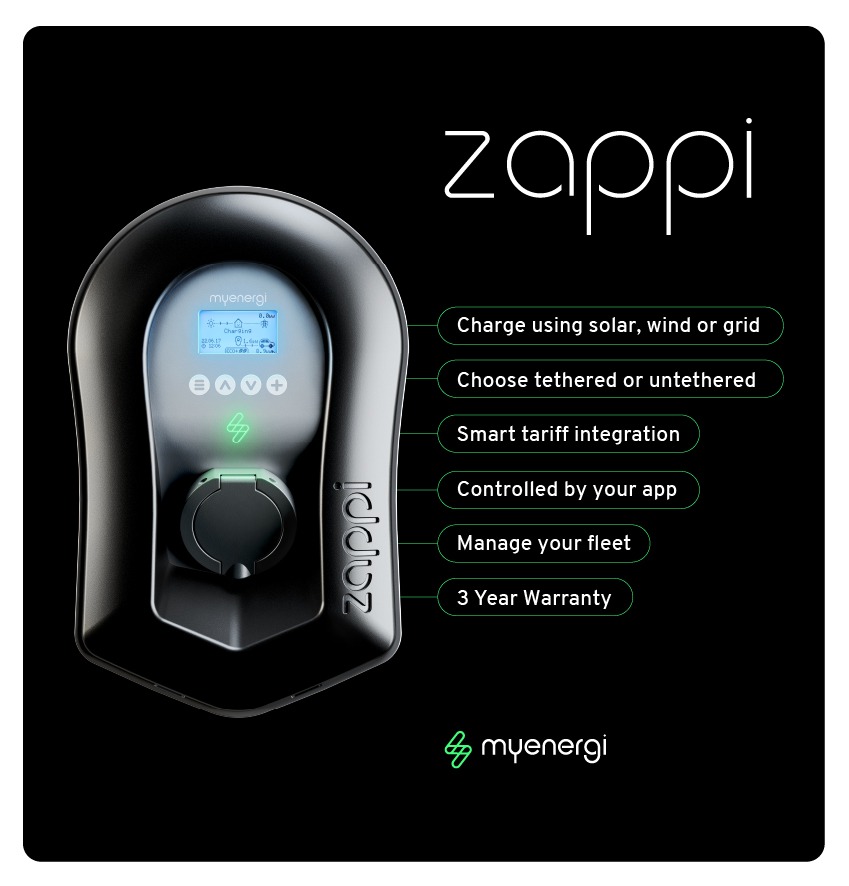
The myenergi zappi is one of the best-known eco-smart chargers available in the UK. Unlike a basic home charger, it can use electricity from the grid, surplus solar generation or a combination of both.
But is the higher purchase and installation cost justified? For Surrey homes, the answer is often yes: particularly if you already have solar panels, are considering adding them, or want a charger that can form part of a wider home energy system.
What is a Zappi EV charger?
A zappi is a smart home EV charger designed to work with both the electricity grid and renewable energy systems. It is available in domestic 7kW single-phase models, as well as higher-powered three-phase versions for suitable properties and commercial applications.
The charger offers three main charging modes:
- FAST mode: Charges your vehicle at the maximum available rate using grid electricity.
- ECO mode: Uses available solar energy while supplementing it with grid electricity when necessary.
- ECO+ mode: Charges only when sufficient surplus renewable energy is available, pausing when the home would otherwise need to import electricity.
A zappi also connects to the myenergi app, allowing you to monitor energy flows, set charging schedules and control charging remotely.
Why Zappi suits Surrey homes
Surrey has many properties with suitable roof space for solar panels, particularly south-facing roofs that can receive strong daylight throughout the day. While roof direction, pitch, shading and panel size all affect generation, a solar PV system can produce useful surplus energy that would otherwise be exported to the grid.
A zappi can direct that surplus into your electric car instead.
This is especially relevant in Redhill, Reigate, Merstham, Nutfield and surrounding areas, where homeowners commonly have driveways or garages that make overnight and daytime charging practical. Rather than relying entirely on public charge points, you can return home, plug in and let your charger select the most suitable energy source.
The benefits may include:
- Greater use of your own solar electricity
- Less reliance on public charging networks
- Reduced grid electricity imports
- Convenient overnight charging
- Better visibility of household energy use
- Compatibility with future solar and battery upgrades
A zappi can also be part of a broader myenergi ecosystem, working alongside products such as eddi for hot water diversion and libbi home battery storage. This can help coordinate how renewable energy is used throughout the property.
How ECO and ECO+ charging work
The main reason homeowners choose a zappi over a standard smart charger is its solar diversion capability.
ECO mode
In ECO mode, the charger tries to use as much available surplus solar energy as possible. If solar production drops: for example, because a cloud passes over the roof: the zappi can supplement the energy from the grid to maintain charging.
This is useful if you want your car to keep charging during variable weather. It may not be the lowest-cost option at every moment, but it can provide a more consistent charging session.
ECO+ mode
ECO+ mode is designed to maximise solar self-consumption. The zappi monitors the energy entering and leaving your property and charges when there is enough surplus energy available.
If solar production falls below the required level, charging pauses rather than importing electricity from the grid. On a bright summer day, this can be an efficient way to charge an EV using energy you have generated yourself. On a cloudy winter day, charging may be slower or intermittent.
Many solar-owning households use ECO+ during the day and then schedule a separate overnight charging session when a cheaper time-of-use tariff is available.
FAST mode
FAST mode charges from the grid at the maximum rate available to the vehicle and installation. It is useful when you need a guaranteed charge quickly, but it should be used thoughtfully.
For example, charging in FAST mode during expensive daytime electricity periods could cost considerably more than charging overnight on a suitable tariff. FAST mode is often most economical when scheduled to coincide with a low-rate window.
Zappi and smart EV tariffs
A zappi can be used with time-of-use tariffs, including options such as Octopus Intelligent Go, OVO Charge Anytime and EDF GoElectric. However, the exact level of integration depends on the tariff, your vehicle and the current list of supported chargers or vehicles.
It is important to understand the difference between:
- A charger with its own timer and smart controls, and
- A fully integrated tariff system that automatically manages charging.
With a zappi, you can use the myenergi app and charger scheduling to charge at selected times. On tariffs with cheap overnight electricity, you may use FAST mode during the supplier’s off-peak window. During daylight hours, ECO or ECO+ can prioritise solar generation.
For example, EDF’s current EV tariff information states that its GoElectric tariff provides a cheaper overnight period and allows customers to use any electric car and charger. You can read the latest details on the EDF EV tariffs page.
Tariff rates, eligibility rules and supported smart-charging arrangements can change. Before switching, check the latest supplier terms and make sure your charging schedule does not conflict with the zappi’s own settings.
CT clamps and Harvi: what you need to know
For ECO and ECO+ modes to work correctly, the charger needs to measure the electricity flowing around your home.
This is done using a CT clamp, or current transformer. It clips around an electrical cable and measures whether your property is importing or exporting energy. The zappi uses this information to identify available solar surplus and help prevent excessive demand on your electrical supply.
The current zappi product information includes a CT clamp with the charger. However, the installation method varies between properties.
A Harvi wireless sensor may be useful where:
- The consumer unit is far from the planned charger position
- The solar inverter is located in a loft, garage or outbuilding
- Running a wired CT cable would be disruptive
- The property layout makes a standard cable run impractical
Harvi can reduce the need for additional cabling, although it adds to the overall equipment cost. Your installer should assess the layout before confirming the most suitable approach.

How much does a Zappi cost to install in Surrey?
A realistic budget for a typical 7kW zappi installation in Surrey is approximately £1,100 to £1,600 installed.
The final price depends on factors such as:
- The selected tethered or untethered model
- Distance between the consumer unit and charger
- Whether the cable route is internal, external or underground
- The condition and capacity of the existing consumer unit
- Whether a Harvi or additional CT clamp is required
- Trenching, containment or protective equipment
- Surge protection and other installation requirements
- Whether solar PV or battery systems need to be integrated
This is more than many basic smart chargers. The additional cost is most easily justified when you have solar panels or intend to install them in the future.
If your home has no solar PV and you expect to charge almost exclusively overnight on a cheap tariff, a less expensive smart charger may provide better value. A zappi still offers useful scheduling and energy monitoring, but some of its strongest features may remain unused.
Is Zappi worth it if you have solar panels?
For a Surrey home with solar PV, a zappi can be a strong investment.
An electric car can use a significant amount of energy over the course of a year. If you regularly drive to work, commute from Redhill or use your EV for business and family journeys, directing surplus solar into the vehicle can increase the value of your generation.
The financial benefit depends on:
- Your annual mileage
- The size and efficiency of your solar array
- Your driving pattern
- The amount of daytime charging possible
- Your export payment rate
- Your electricity tariff
- Whether you also have a home battery
It is not correct to assume that every charge will be free. Solar output varies, and charging during the day may not always be practical. However, ECO+ gives you the option to use surplus generation automatically, while overnight scheduling provides a reliable backup.
If you are also considering a battery, the system design needs careful planning. Charging the car from solar may be beneficial, but diverting every available unit of energy into the vehicle could reduce the amount stored for evening household use. A qualified installer can help balance EV charging, battery storage and general home demand.
Electrical checks before installation
Before installing any 7kW EV charger, your electrician should assess the property’s electrical capacity. This may include checking:
- The incoming electricity supply
- The existing consumer unit
- Main earthing and bonding
- Cable routes and protection
- Available spare capacity
- The location of solar and battery equipment
- The need for load management
- Required surge protection and safety devices
Older homes may need an electrical upgrade before a charger can be installed safely. If the consumer unit is outdated, an upgrade to a modern 18th Edition-compliant consumer unit may be recommended.
EV charger installation should always be completed by a suitably qualified professional who understands the relevant wiring requirements and manufacturer instructions.
Choose an experienced EV charger installer in Redhill
A zappi is only as effective as its installation and configuration. Correct CT clamp positioning, reliable connectivity and appropriate scheduling are essential if you want to make the most of solar diversion and smart tariffs.
ADS Electrical is an NICEIC Approved Contractor providing domestic, commercial and industrial electrical services throughout Redhill, Surrey and nearby areas. We offer:
- Free quotes within 24 hours
- Fast and efficient service
- Reliable communication throughout your project
- Professional EV charger installation
- Electrical capacity and consumer unit checks
- Coordination with solar, building and other trades where required
If you are considering a zappi for your home, contact ADS Electrical for a practical assessment and clear advice. Our EV charger installation Redhill service can help you choose a suitable charger, plan the cable route and integrate your new system with your existing electrical installation.
You can also contact ADS Electrical for a free quote.
Final verdict: is Zappi worth it for Surrey homes?
A zappi is usually worth considering if you:
- Already have solar PV
- Plan to install solar panels
- Want to maximise self-generated energy
- Need flexible ECO, ECO+ and FAST charging modes
- Are interested in future battery or home energy integration
- Have a suitable driveway or private parking space
It may be less compelling if you have no solar system, do not plan to add one and simply want the lowest-cost way to charge overnight.
For many Surrey homeowners, however, the combination of solar-friendly roofs, private driveways and increasing EV ownership makes the zappi a future-ready choice. With the right installation and a carefully managed tariff, it can provide convenient charging today while leaving room for a more energy-efficient home in the future.